
We got sent a couple of close-up shots of a glad hand assembly straight off a trailer, and honestly, it’s a perfect real-world example of the exact thing we talk about on this site all the time: the part that keeps your trailer’s brakes working is small, cheap, and almost always the last thing anyone looks at — until it’s the reason something goes wrong.
Let’s break down what’s actually going on in these photos, because there are two different problems happening here, and they don’t get equal attention.
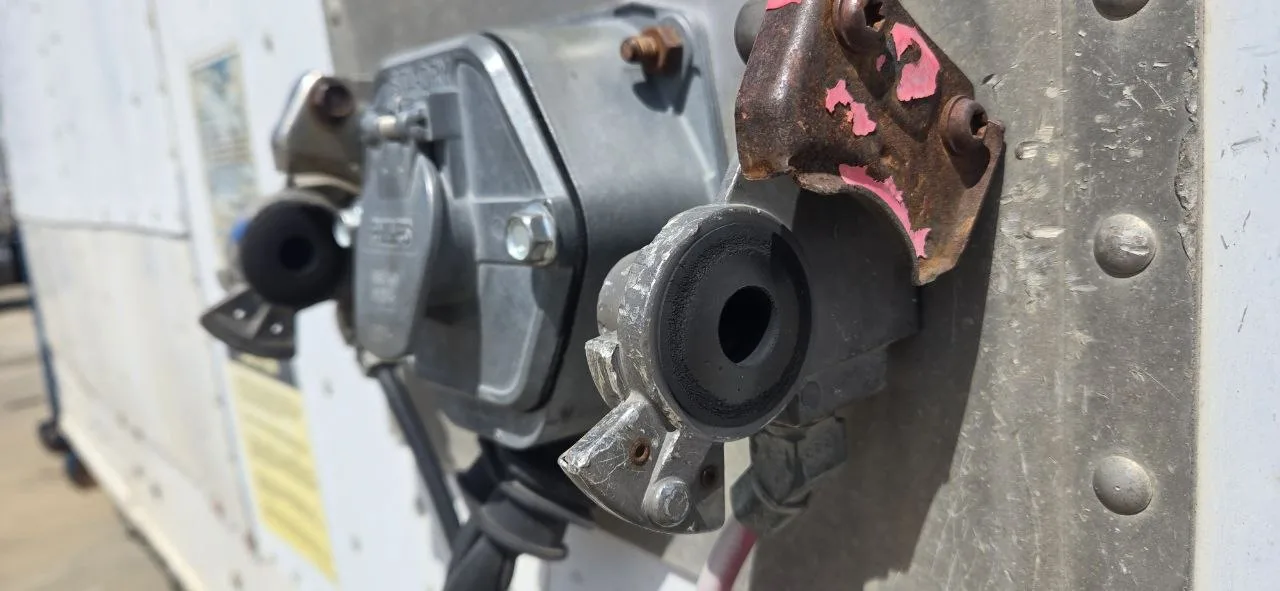
A glad hand seal that still looks intact but sits in a badly corroded mounting bracket — a common combination that leads to air leaks and brake system failures.
The Rubber Seal: Not Dead Yet, But Not Far Off
The black rubber grommet — the actual glad hand seal — isn’t in total failure mode. It’s still holding its shape, the bore is round, and it hasn’t gone chalky-gray the way rubber does when UV and ozone have really cooked it. If you just glanced at it doing a pre-trip, you might wave it through.
That’s the problem. A seal doesn’t have to look destroyed to be leaking. Rubber hardens gradually — it loses the pliability that lets it compress and form an actual airtight connection long before it starts visibly cracking or crumbling. A seal that’s gone stiff can look perfectly intact and still be bleeding air every time the system builds pressure. You won’t necessarily hear it. You might not even feel it with your hand on a cold day. But your compressor will know — it’ll cycle more than it should, working overtime to make up for air that’s escaping at a coupling that “looks fine.”
That’s exactly why we always tell people: don’t eyeball it, soap-test it. A seal under real working pressure with a little soapy water on it will tell you the truth in about ten seconds. Looking at it in a parking lot won’t.
The Mounting Bracket: This Is the Part Nobody Talks About
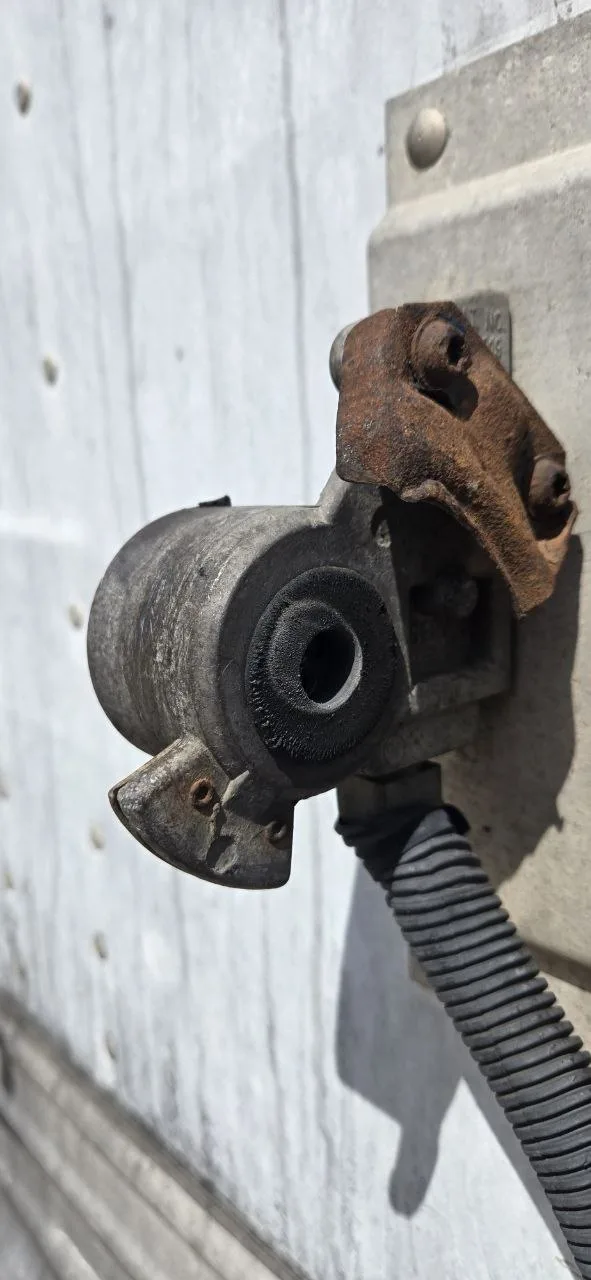
Heavy rust and flaking paint around the mounting bolts of this glad hand bracket signal a structural problem, not just a seal problem.
Here’s what actually jumps out in these photos, and it’s not the rubber — it’s the bracket.
That mounting bracket is heavily rusted. Not surface rust, not a little road grime — we’re talking flaking paint, exposed scaling corrosion, and pitting concentrated right around the mounting bolts. That’s the worst possible place for corrosion to set in, because that’s the hardware holding the entire glad hand assembly to the trailer.
Nobody puts “check the bracket” on their pre-trip mental checklist. Everyone thinks about the seal because the seal is the part that obviously does the sealing. But if the bracket holding that assembly in place is rotting from the inside out, you’ve got a structural problem, not just an air-leak problem. Corrosion around bolt holes loosens the mount over time. A loose mount lets the glad hand shift, flex, and vibrate against the mating line every time the trailer hits a bump — which chafes the air lines, stresses the coupling, and eventually turns a “slow leak” into “no brakes on that axle” at the worst possible time.
Why This Combination Is a Bigger Deal Than Either Problem Alone
A hardened seal by itself: annoying, wastes air, costs you compressor cycles.
A rusted bracket by itself: ugly, but if everything’s still tight, it can limp along for a while.
Both together, on the same fitting: now you’ve got a seal that isn’t sealing properly sitting in a housing that isn’t held as securely as it should be. That’s how you get a glad hand that starts leaking worse under vibration and load — exactly the conditions you’re in on the highway, fully loaded, going down the road at 65 mph. Not sitting still in the yard where everything always looks and feels fine.
This is precisely the scenario DOT inspectors are trained to catch, and it’s exactly the kind of thing that turns into a roadside brake-related citation, an out-of-service order, or worse — an actual brake performance issue on a loaded trailer. Air brake systems are built with redundancy for a reason, but redundancy isn’t a plan. It’s a backup for when something already went wrong.
The Fix Costs Less Than Your Lunch
A new glad hand seal runs a few bucks. Cleaning up or replacing a corroded mounting bracket costs a little more in labor, but it’s still a fraction of what a roadside inspection failure costs you in downtime — and nowhere close to what an actual air-loss incident costs in liability, cargo, or worse.
The lesson from these photos isn’t “replace your seals.” It’s “look past the seal.” Check the bracket, check the bolts, check for rust jacking around the mounting points. The seal gets all the attention because it’s the visible rubber part with an obvious job. The bracket holding it in place is just as critical, and it’s the part almost nobody inspects until it’s already failing.
If your fleet’s glad hands are original equipment and you honestly can’t remember the last time someone replaced one, that’s your answer. Don’t wait for a photo like this to be your own trailer.